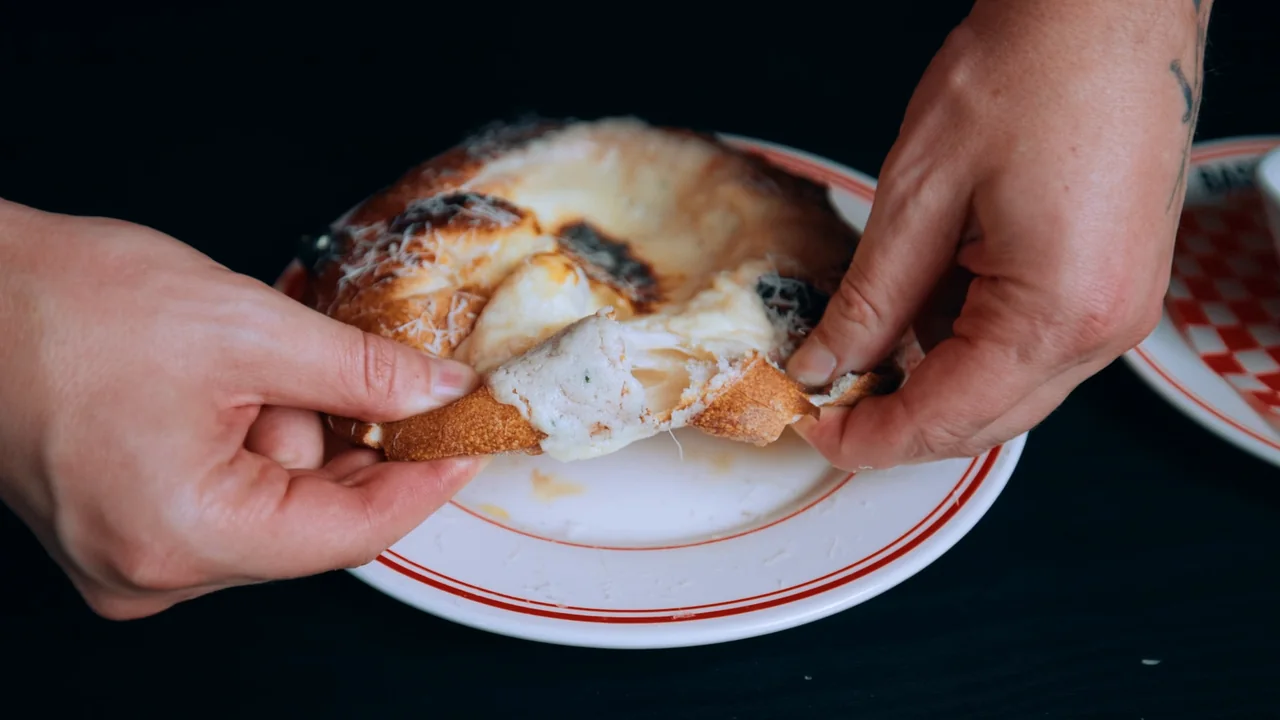
Grated over a bowl of pasta, pecorino and Parmesan look identical. Taste them and the difference is obvious. The simplest way to understand pecorino vs Parmesan is to try each one on the same plain pasta.
The basic difference
Pecorino is made from sheep’s milk. The name comes from “pecora,” the Italian word for sheep. The best-known kind is Pecorino Romano.
Parmesan is made from cow’s milk. The original is Parmigiano Reggiano, from northern Italy.
Different animals, different milk, different cheese.
Side by side
| Pecorino Romano | Parmigiano Reggiano | |
|---|---|---|
| Milk | Sheep | Cow |
| Aging | Several months | At least a year, often two |
| Flavor | Sharp, tangy, salty | Nutty, savory, slightly sweet |
| Saltiness | High | Moderate |
| Texture | Firm and crumbly | Hard and grainy |
On the same bowl of pasta
Take plain pasta with a little butter and split it into two bowls.
With pecorino, the first thing you notice is salt, followed by a sharp tang. The flavor is bold and a little grassy. It wakes the pasta up.
With Parmesan, the taste is rounder. It is nutty and savory, with a slight sweetness. It makes the pasta taste richer without taking over.
Neither is better. Pecorino is the stronger voice. Parmesan is the more balanced one.
Which pasta gets which cheese?
Italian tradition pairs the cheese with the region:
- Pecorino belongs to Rome. It is the cheese in cacio e pepe, carbonara and amatriciana.
- Parmesan belongs to the north. It goes with Bolognese, butter sauces and stuffed pasta.
A useful rule: bold, peppery or pork-based sauces can handle pecorino. Delicate or creamy sauces usually prefer Parmesan.
Can you substitute one for the other?
Yes, with care. Pecorino is saltier, so if you swap it in for Parmesan, use a little less and cut back on other salt. If you swap Parmesan in for pecorino, the dish will be milder.
Many cooks blend the two. A mix gives you the tang of pecorino and the depth of Parmesan.
Both at once
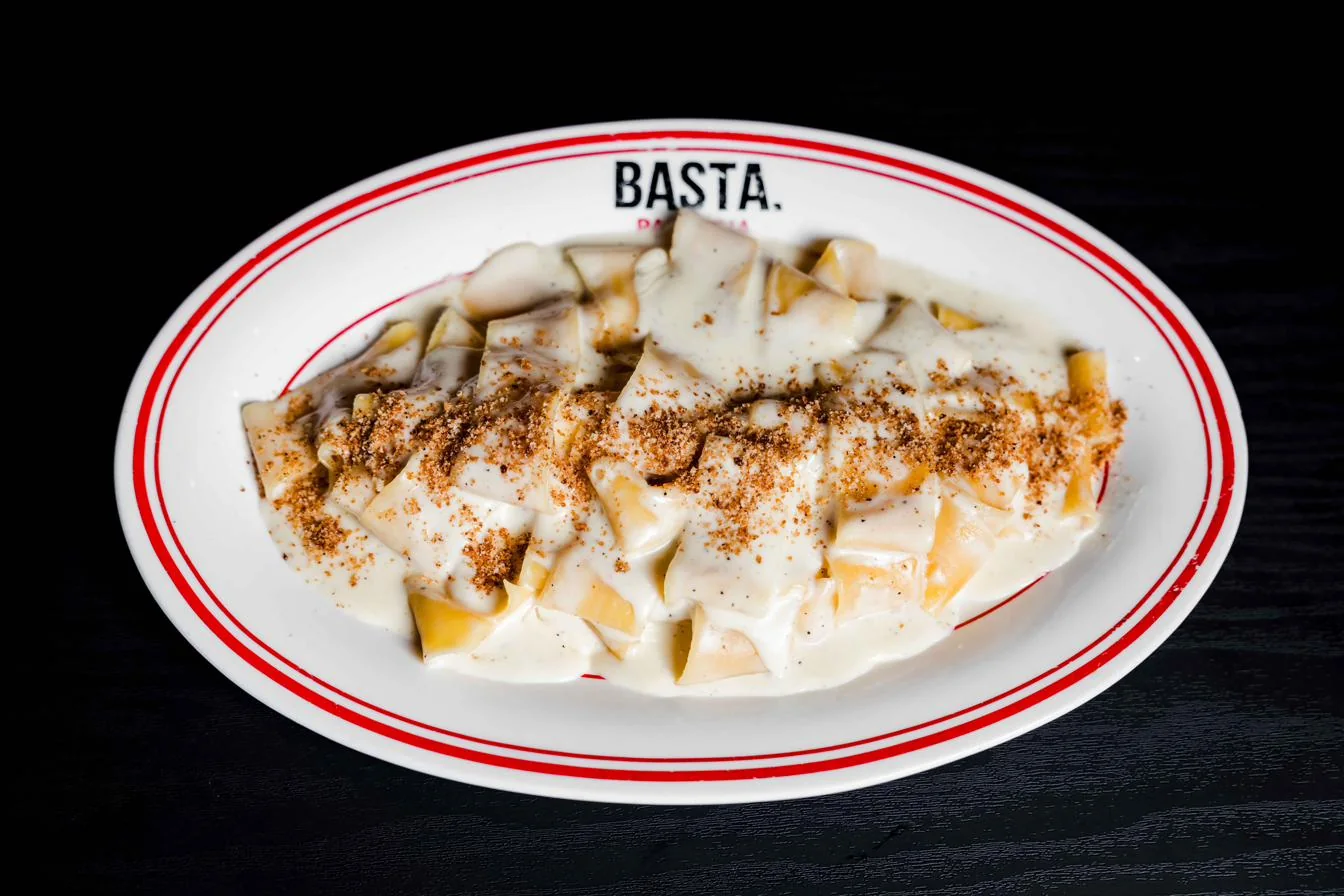
That blend is what goes into our Pappardelle Cacio e Pepe. The sauce is made with Parmigiano and pecorino together, with black pepper and cream, finished with crispy breadcrumbs. You get the bite of one and the roundness of the other.
Buying and storing
- Buy a wedge, not a tub. Freshly grated cheese has far more flavor.
- Wrap it in paper, then loosely in plastic. It needs to breathe a little.
- Save the rind. A Parmesan rind adds depth to soups and sauces.
A note for vegetarians
Traditional versions of both cheeses are made with animal rennet. Strict vegetarians should check the label or ask.
Read more in what is cacio e pepe, or see how the cheeses appear in carbonara vs. Alfredo.