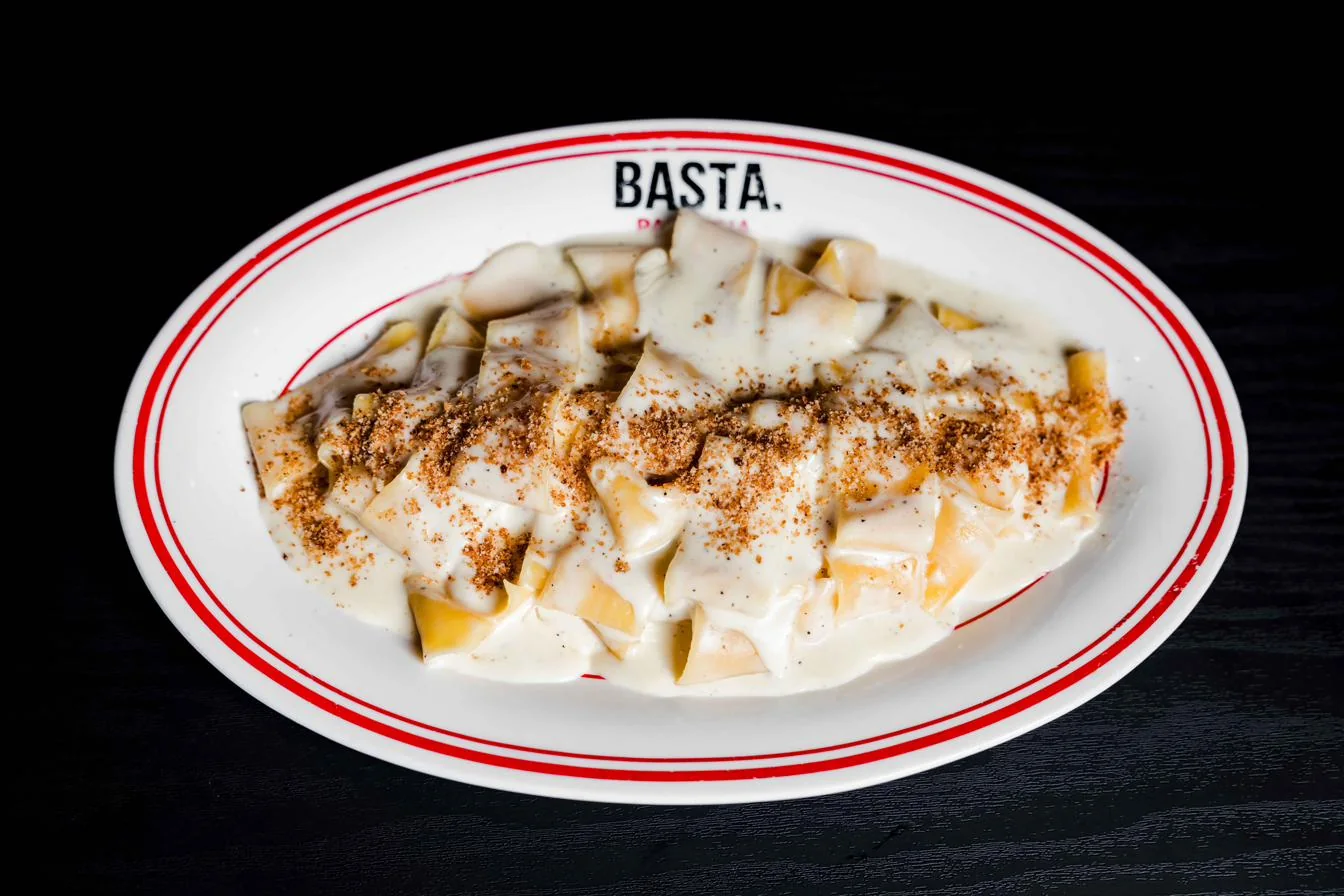
There are Italian dishes with long ingredient lists, and then there’s cacio e pepe. Its name means cheese and pepper, and the traditional Roman preparation is famous for turning a handful of ingredients into a deeply satisfying pasta dish.
At its core are pasta, finely grated Pecorino Romano, freshly ground black pepper, and pasta cooking water. The goal is a silky coating rather than a pool of cream. Getting that texture right takes attention, which is one reason such a simple dish remains memorable.
What does cacio e pepe taste like?
Expect a salty, savory cheese flavor with the unmistakable warmth and aroma of black pepper. Pecorino Romano is made from sheep’s milk and generally has a sharper character than mild cheeses. The black pepper balances that richness and makes the dish feel lively rather than one-note.
Properly made, the sauce coats the pasta evenly. It should feel smooth and glossy, not grainy or clumped.
Is there cream in cacio e pepe?
A classic Roman cacio e pepe sauce usually does not need cream. It relies on emulsifying cheese with starchy pasta water to make a sauce that clings to each noodle. That technique may sound simple, but temperature and timing matter: adding cheese when the pan is too hot can cause clumping.
Restaurants may adapt the dish, so their versions can differ. If you need to know whether a particular menu item uses cream or other dairy, ask rather than assuming it follows the most traditional recipe.
What pasta goes with cacio e pepe?
Long shapes such as tonnarelli and spaghetti are frequently associated with Roman cacio e pepe. Wider ribbons like pappardelle can be delicious too. More surface area means more room for cheese and pepper to spread across every bite.
The shape is only part of the equation. The sauce must be distributed well enough that every forkful gets the same balance of savory cheese and pepper.
Cacio e pepe versus Alfredo
Both can look creamy on the plate, but they are not the same dish. Cacio e pepe is built around cheese and black pepper; Alfredo is traditionally associated with butter and Parmesan, with many American versions adding cream. Cacio e pepe tends to have a more pronounced pepper flavor and a sharper cheese profile.
Where to try cacio e pepe in Utah
BASTA Pasteria’s menu includes Pappardelle Cacio e Pepe. It’s a helpful entry point for guests who enjoy cheese-forward pasta and want something different from tomato sauce.
Explore current availability and order from Murray or Draper. Since the dish is cheese-based, anyone avoiding dairy should ask about ingredients before placing an order.