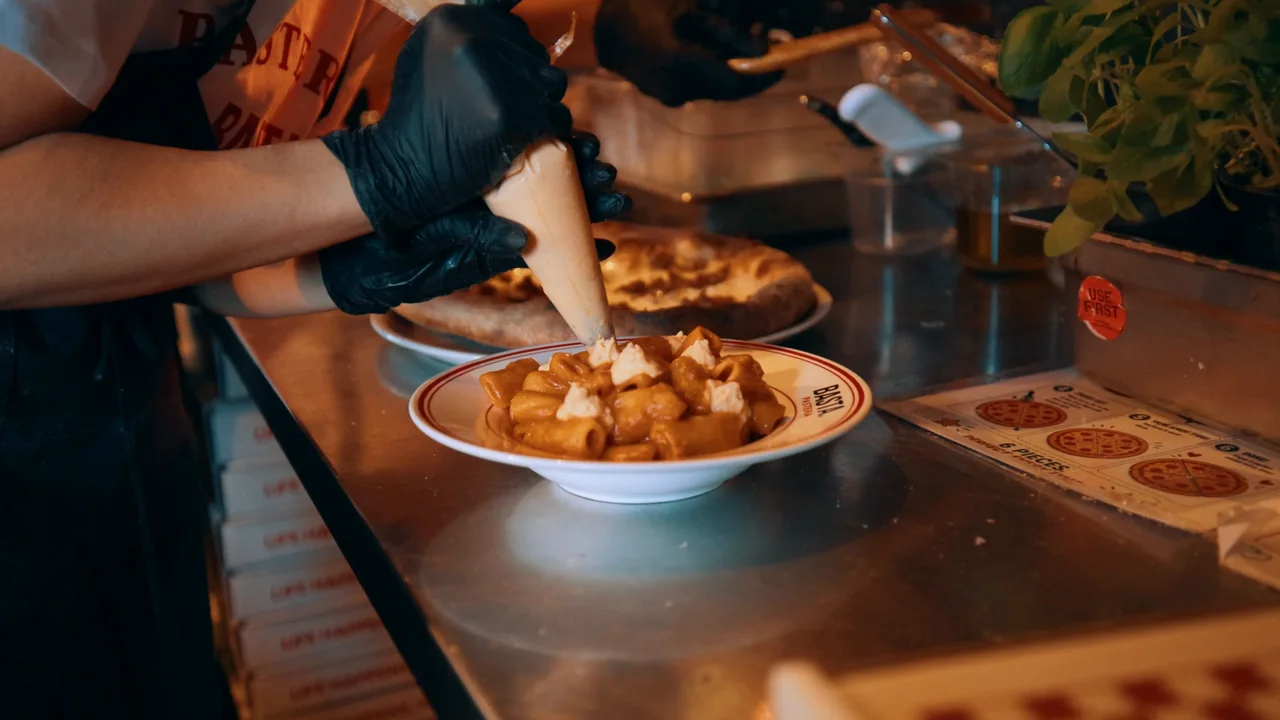
Rigatoni and penne sit next to each other on the shelf, and plenty of recipes treat them as the same thing. They are not. In the matchup of rigatoni vs penne, the size of the tube and the way it is cut change how each bite turns out.
How to tell them apart
| Rigatoni | Penne | |
|---|---|---|
| Size | Wide, large tube | Narrow, smaller tube |
| Ends | Cut straight | Cut on a diagonal |
| Surface | Always ridged | Ridged or smooth |
| Bite | Chewy and substantial | Lighter and firmer |
The names give it away. Rigatoni comes from the Italian word for ridged. Penne means pens or quills, a nod to the angled tip.
Same sauce, two results
Put a thick tomato and cream sauce on both and watch what happens.
On rigatoni, sauce fills the wide tube and settles into the deep ridges. Each piece carries sauce inside and out. The pasta is big enough to stand up to the richness, so the bite feels balanced.
On penne, the narrower tube takes in less sauce, and smooth penne lets some of it slide off. The pasta itself is more noticeable in each bite. That is not a flaw. With thinner sauces, penne feels neat and light.
When to use each one
Choose rigatoni for:
- Thick, creamy or chunky sauces
- Meat ragù with pieces that can slip inside the tube
- Baked pasta, where a sturdy shape matters
Choose penne for:
- Lighter tomato sauces
- Pasta salads
- Dishes with small vegetables cut to the same size
Why we make rigatoni
At BASTA, rigatoni is one of the shapes we make fresh every day. It is the base for two of our most ordered pastas, Rigatoni Vodka and Rigatoni Pomodoro. Fresh rigatoni has a tender chew that dried tubes do not, and the ridges hold our sauces the way we want them to.
Can you swap them?
Yes. In most recipes, one can stand in for the other. Expect a slightly lighter dish with penne and a heartier one with rigatoni. If the sauce is thick, rigatoni is the safer choice.
Curious about other shapes? Our guide to pasta shapes and sauces covers the basics, and the best pasta for vodka sauce goes deeper on this pairing.