Nearly every pasta recipe tells you to cook until al dente. Few explain how to tell. So what does al dente mean? It is Italian for “to the tooth.” It describes pasta that is cooked through but still firm when you bite it.
The three-piece test
The easiest way to learn is to compare. Cook dried rigatoni and pull out three pieces at different times. Cut each one in half and look at the cut edge.
Piece one: undercooked. Pulled a few minutes early. The cut edge shows a thick white ring or core in the middle of the pasta wall. It looks chalky. When you bite it, it is hard and sticks to your teeth.
Piece two: al dente. Pulled at the right moment. The white core has shrunk to a thin, pale line, or it has just disappeared. The pasta is the same color almost all the way through. It bends without breaking, and when you bite, there is gentle resistance.
Piece three: overcooked. Pulled a few minutes late. The cut edge is one even color and looks swollen. The tube has lost its shape and may be splitting. It is soft all the way through, with no bite at all.
At a glance
| Undercooked | Al dente | Overcooked | |
|---|---|---|---|
| Inside | Thick white core | Thin pale line or none | Even and swollen |
| Bite | Hard, chalky | Firm but tender | Soft, mushy |
| Shape | Stiff | Holds its shape | Limp |
Why al dente matters
- Better texture. Firm pasta is more pleasant to eat.
- It holds sauce. Pasta that keeps its shape carries sauce better.
- It keeps cooking. Pasta continues to soften in hot sauce. Starting al dente leaves room for that.
How to cook pasta al dente
- Use plenty of boiling, salted water.
- Start tasting two minutes before the time on the package.
- Bite a piece. It should be tender with a slight firmness in the center.
- Drain it right away, and save a cup of the cooking water.
- Finish it in the sauce for the last minute.
Does fresh pasta get cooked al dente?
Fresh pasta is different. It is tender from the start and cooks in just a few minutes, so it never has a hard white core. Properly cooked fresh pasta is soft with a pleasant chew. It should not be mushy, and it should not be stiff.
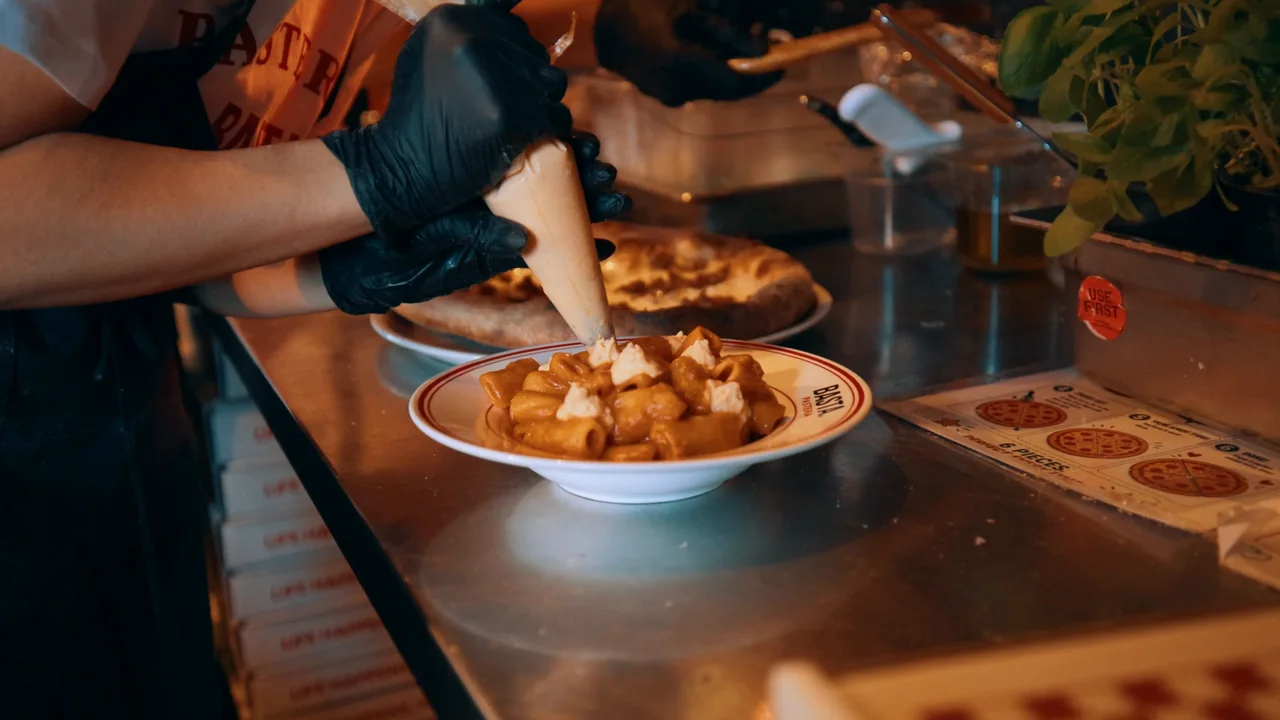
That is the texture we aim for at BASTA, where the rigatoni, pappardelle and bucatini are made fresh every day.
Common mistakes
- Trusting the clock alone. Package times are a guide. Taste the pasta.
- Rinsing after draining. It washes off the starch that helps sauce cling.
- Letting it sit. Drained pasta keeps cooking and sticks together.
Is al dente pasta undercooked?
No. Al dente pasta is fully cooked. It is just not soft. If the center is white and chalky, it needs more time.
Taste the difference
Order the Rigatoni Pomodoro and pay attention to the bite. Then read fresh pasta vs. dried pasta to see how the two compare, or rigatoni vs penne for more on the shape.