Leftover creamy pasta can go wrong in the microwave. The sauce turns oily, the pasta dries out and the dish looks nothing like it did the night before. Learning how to reheat creamy pasta comes down to two rules: go slowly and add liquid.
Why cream sauces split
A cream sauce is fat and water held together. High heat breaks that bond. The fat separates and pools as oil, and the rest turns grainy.
In the refrigerator, the pasta also soaks up moisture from the sauce. So leftovers start out drier and thicker than the original dish.
Gentle heat keeps the sauce together. Added liquid replaces what the pasta absorbed.
Method 1: the stovetop
This is the best method.
- Put the pasta in a pan over low heat.
- Add a splash of milk, cream or water. Start with a tablespoon or two per serving.
- Stir gently and often as it warms.
- Add more liquid if the sauce looks tight.
- Take it off the heat as soon as it is hot.
It takes about five minutes. Do not let it boil.
Method 2: the microwave
The microwave works if you slow it down.
- Put the pasta in a microwave-safe bowl.
- Add a splash of milk or water and stir.
- Cover loosely.
- Heat at half power for one minute.
- Stir, then repeat in 30 second bursts until hot.
Stirring between bursts is what prevents hot spots and split sauce.
Method 3: the oven
Use the oven for large amounts or baked dishes.
- Heat the oven to 350 degrees.
- Put the pasta in a baking dish and stir in a little milk or water.
- Cover tightly with foil.
- Bake for 15 to 20 minutes, stirring once halfway.
Which liquid should you add?
| Liquid | Best for |
|---|---|
| Milk | Most cream sauces |
| Cream | Very rich sauces |
| Water | Tomato cream sauces |
| Broth | Extra savory flavor |
How to fix a sauce that has split
If the sauce turns oily, take it off the heat. Add a spoonful of cold milk or cream and stir briskly. A small handful of grated cheese can help bring it back together.
Storing leftovers
- Refrigerate pasta within two hours of serving.
- Store it in a sealed container.
- Eat it within three to four days.
- Reheat until it is steaming hot all the way through.
- Reheat only what you plan to eat. Repeated reheating wears the sauce out.
Do some creamy pastas reheat better than others?
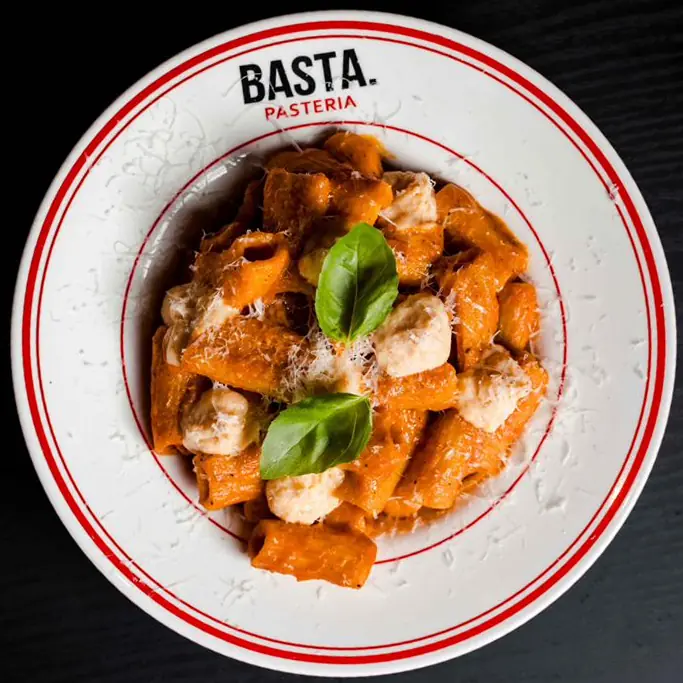
Yes. Tomato cream sauces, like vodka sauce, are the most forgiving. Cheese sauces such as cacio e pepe need extra liquid and gentle stirring. Carbonara is the hardest, because it is made with eggs. Reheat it over very low heat with a splash of water and expect a slightly different texture.
Bringing BASTA home
If you take home Rigatoni Vodka or Pappardelle Cacio e Pepe, the stovetop method with a splash of milk brings it closest to how it left our kitchen. For more takeout advice, read our Italian takeout ordering tips.