Pesto is thick, uncooked and full of tiny pieces of basil, nuts and cheese. It does not pour over pasta the way a tomato sauce does. It has to be caught. Choosing the best pasta for pesto is about finding shapes with plenty of places for the sauce to stick.
What makes a good pesto pasta
Look for one of three things:
- Twists and spirals that trap the sauce in their grooves
- Thin strands that coat evenly
- Soft, slightly rough surfaces that hold on to oil and herbs
Large, smooth tubes are the weakest choice. Pesto slides off them.
The traditional shapes
Pesto comes from Liguria, the coastal region around Genoa, and the local pastas were made for it:
- Trofie. Short, hand-rolled twists. The classic partner.
- Trenette. A long, narrow, flat noodle similar to linguine.
In Liguria, the pasta is often cooked with potatoes and green beans, which are tossed in the pesto too.
Shapes you can find anywhere
| Shape | Why it works |
|---|---|
| Fusilli | Spirals hold sauce in every turn |
| Gemelli or casarecce | Twisted grooves catch the pesto |
| Linguine | Flat strands coat evenly |
| Farfalle | The pinched center grabs sauce |
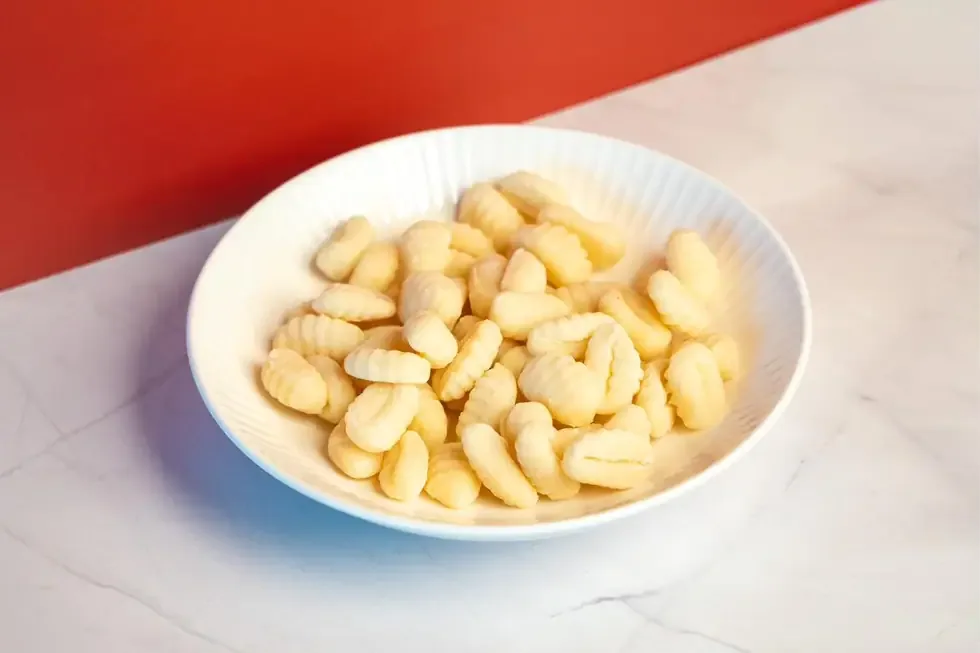
| Gnocchi | Soft surface soaks it up |
Why gnocchi and pesto work so well
Potato gnocchi are soft and a little porous, so pesto clings to them easily. The mild potato flavor lets the basil stand out. It is one of the most satisfying ways to eat pesto.
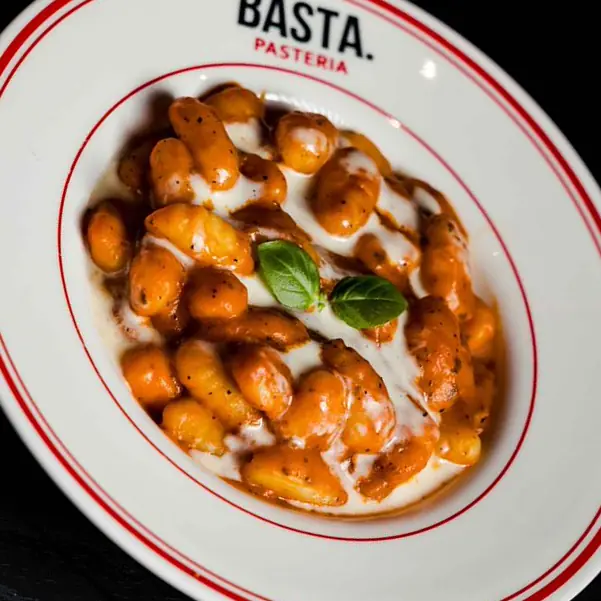
That is the pairing on our menu. Gnocchi Pesto is soft potato gnocchi in a creamy pesto sauce.
How to toss pasta with pesto
Pesto should never be cooked. Heat dulls the basil and turns it dark. Follow these steps:
- Put the pesto in a large bowl, not in a hot pan.
- Save a cup of the pasta cooking water.
- Add the drained pasta to the bowl.
- Toss, adding pasta water a spoonful at a time, until the sauce is loose and glossy.
Use about 3/4 to 1 cup of pesto per pound of pasta. Our guide to sauce per pound of pasta has the full chart.
Other kinds of pesto
Basil pesto is the best known, but the word covers any pounded sauce. Sicilian pesto is made with tomato and almonds, and pistachio pesto is rich and slightly sweet. At BASTA, Sicilian pesto goes on the Mamma’s Kiss Focaccia and pistachio pesto tops the Cheesy Garlic Pagnotta.
A note on allergies
Pesto usually contains nuts and cheese. If you have an allergy, ask our team about the ingredients in each dish.
Read more in what is pesto pasta or find out whether pesto is vegan.