Planning a reception menu can spiral. Every relative has an opinion, and the list keeps growing. A simpler approach is to choose one main dish and build everything else around it. A focused reception food menu is easier to budget, easier to serve and easier for guests to enjoy.
Step 1: choose the anchor
The main dish should be something that:
- Most guests will eat without hesitation
- Holds up well for an hour or more
- Can be made in large amounts without losing quality
Pasta meets all three. A sturdy pasta in a well-loved sauce, or a baked dish like lasagna, makes a reliable center for the meal.
Step 2: offer it two ways
One main dish does not have to mean one flavor. Serve the same kind of dish in two versions so guests still have a choice:
- A tomato-based pasta and a creamy pasta
- One with meat and one without
This covers guests who do not eat meat, without adding a separate menu.
Step 3: add sides that support the main
Sides should balance the anchor, not compete with it.
| If the main dish is | Add |
|---|---|
| Rich and creamy | A crisp salad, plain bread |
| Tomato-based | Something creamy, such as burrata or ricotta |
| Meaty | A fresh vegetable or salad |
Three sides are enough: a salad, a bread and one more.
Step 4: bookend the meal
Before dinner: one or two appetizers that guests can eat while they mingle. Warm bread and meatballs work well.
After dinner: dessert that is easy to pick up. Cannoli and small portions of tiramisù do not need a fork and a seat.
A sample menu
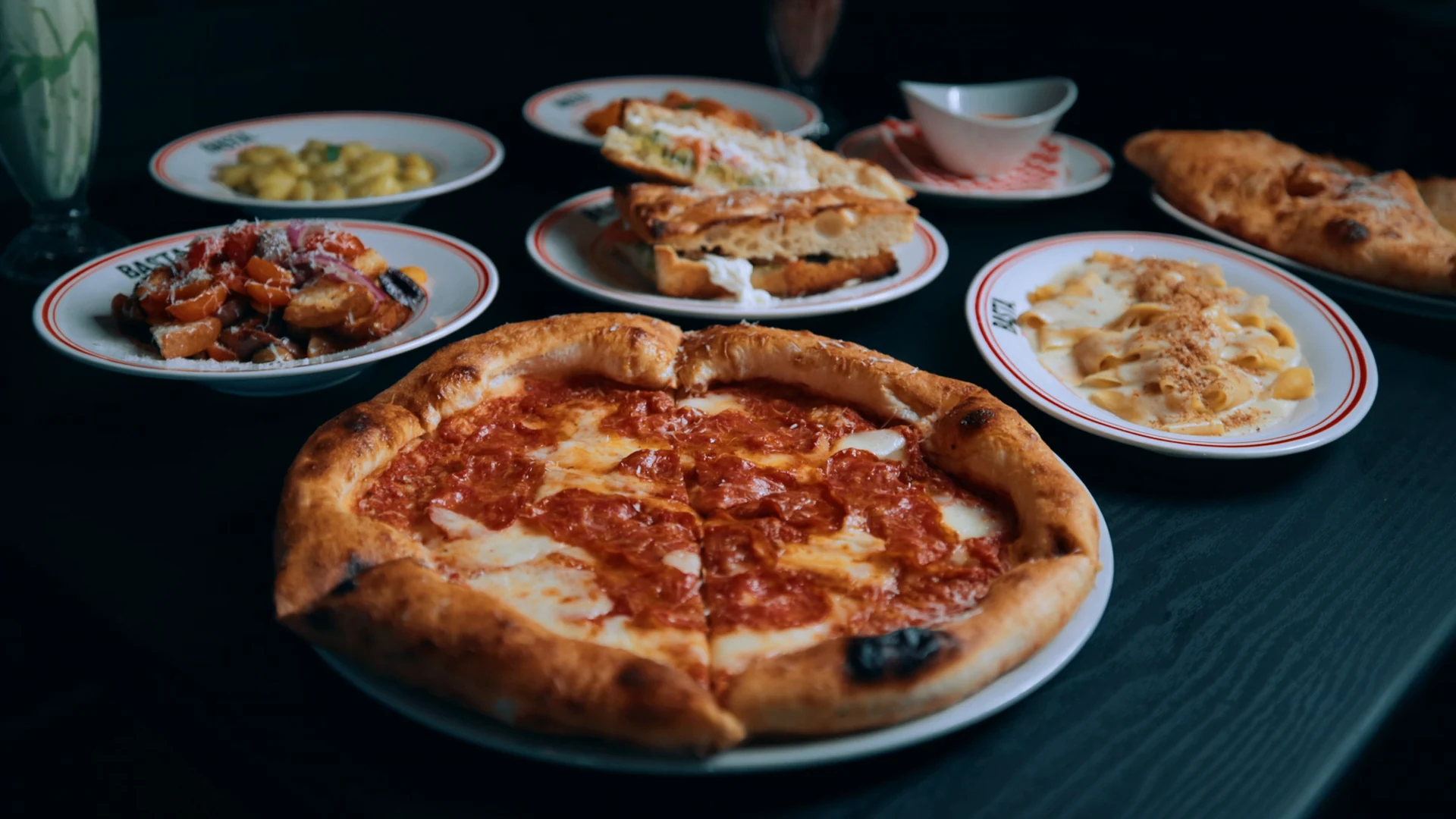
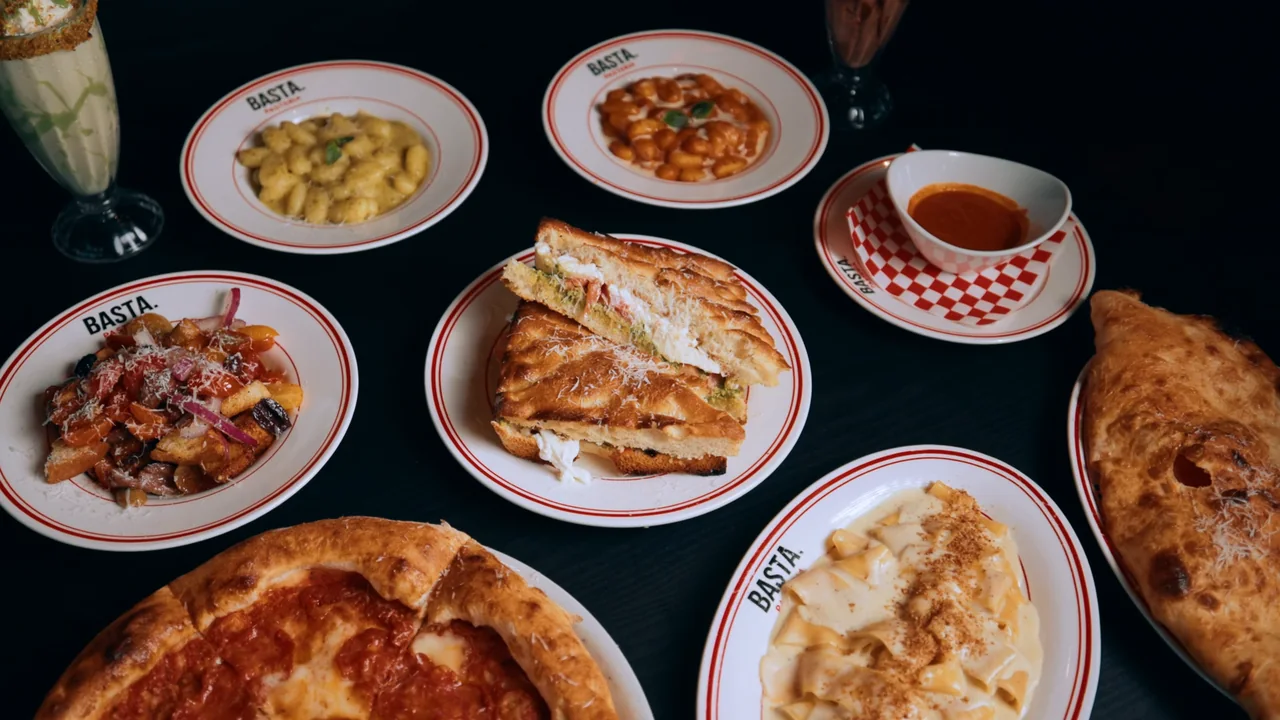
- To start: Cheesy Garlic Pagnotta, Nonna’s Meatballs
- Main dish, two ways: Rigatoni Pomodoro and Rigatoni Vodka
- Sides: Caesar Salad, focaccia
- Dessert: Cannoli
That is seven items, and it feeds almost any crowd.
Why fewer dishes work better
- The budget goes further. Ordering more of fewer dishes costs less than small amounts of many.
- The line moves faster. Guests decide quickly when there are fewer choices.
- Less food is wasted. It is easier to estimate amounts.
- The meal feels intentional. A clear theme is more memorable than a little of everything.
Common mistakes
- Adding a second main dish “just in case”
- Forgetting a meatless option
- Choosing food that needs to be eaten the moment it is served
Getting the amounts right
Use our pasta portion chart for the main dish, and see how much salad per person for the sides.
BASTA caters receptions for about 20 to 200 guests. Send a catering request and tell us your anchor dish, and we will build the rest of the menu with you.